
When Words Take Their Time: The Lost Art of Writing a Letter
October 22, 2026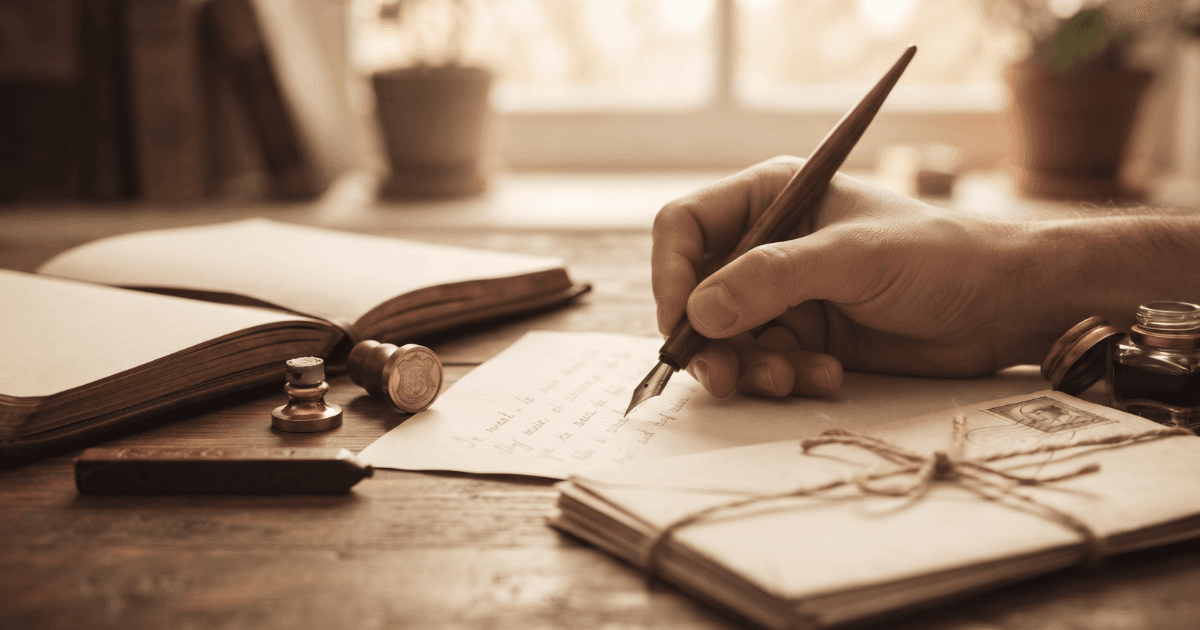
✍️ Authored by Anwesh Goda, Senior Specialist, Process Control Analysis Team at Synchrony
We live in a world where everything is instant. In this fast-paced environment, where people connect through email and social media, writing a letter can feel like a slow, old-fashioned way to stay in touch.
Yet, despite its slower pace, receiving a handwritten letter carries a special emotion. World Letter Writing Day, observed on September 1, reminds us of this simple yet beautiful form of connection.
A letter carries more than words. It carries the time, thoughts and emotions of the person who wrote it.
Before putting pen to paper, a person thinks about what to write and chooses the right words to convey their feelings to the reader. Unlike a text message, a letter reflects a person’s time, thoughtfulness and personality.
For me, letter writing is particularly meaningful because we live in an age where communication has become faster, but not necessarily deeper.
We may speak to many people every day and still struggle to express what we truly feel. A letter gives us the space to say things we might otherwise leave unsaid: “Thank you,” “I miss you,” “I am proud of you,” or simply, “I am thinking about you.”
There is also something beautiful about the physical nature of a letter. The handwriting, the paper, the envelope and even the little imperfections make it personal. Years later, a letter can become a memory. A digital message may disappear among hundreds of conversations, but a handwritten letter can remain safely in a drawer and suddenly bring back an entire moment, relationship or phase of life.
Perhaps what makes letter writing even more special is the anticipation it creates. Unlike instant messages that arrive within seconds, a letter asks us to wait. That waiting may seem unusual in today's world, but it also creates a sense of excitement and appreciation. The moment an envelope arrives with familiar handwriting on it, there is a quiet joy in knowing that someone took the time to sit down and write to you.
Letter writing can also be a meaningful way of preserving stories and memories. A letter written during an important moment in our lives can capture thoughts and emotions exactly as they were at that time. Years later, reading those words can take us back to a particular place, a particular person or even a particular version of ourselves. In this way, letters become more than communication; they become personal pieces of history that we can revisit and share with future generations.
In the workplace too, where communication is often brief, digital and task-focused, taking a moment to express appreciation can make a meaningful difference. A handwritten note thanking a colleague for their support, congratulating someone on an achievement or simply acknowledging their contribution can leave a lasting impression.
It reminds us that behind every email, meeting and deadline are people who value being seen, appreciated and remembered.
World Letter Writing Day is not just about reviving an old form of communication; it is about encouraging us to slow down in a world that constantly asks us to hurry. It reminds us that meaningful communication is not always about speed. Sometimes, it is about sincerity.
Perhaps we do not need to write long letters every day. We could begin with one letter to a parent, friend, teacher, grandparent or even our future self. In the end we may be surprised by how powerful a few handwritten pages can be.
Technology has changed the way we communicate, and there is nothing wrong with embracing that change. But some traditions deserve to survive because they remind us of something human. A letter is not merely a message. It is a moment of someone’s life, carefully placed on paper and given to another person.
On World Letter Writing Day, perhaps the most meaningful thing we can do is simply pick up a pen and write.